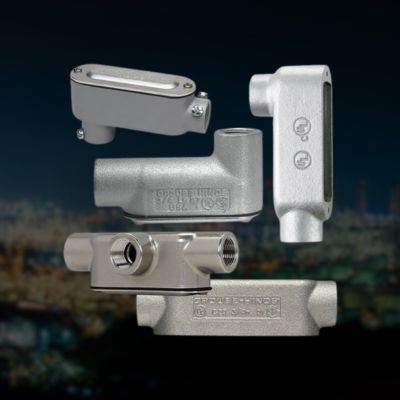
If you have spent any time in the electrical aisle of a hardware store or listened to electricians talking on a job site, you may have heard the term “Condulet.”
While it sounds like a technical piece of jargon, the concept is actually quite simple. However, there is a distinct difference between the brand name and the generic part.
In this guide, we’ll explain exactly what a Condulet is, why electricians use them, and how to decode the confusing letter system (LB, LL, LR) used to identify them.
The Short Answer: What is it?
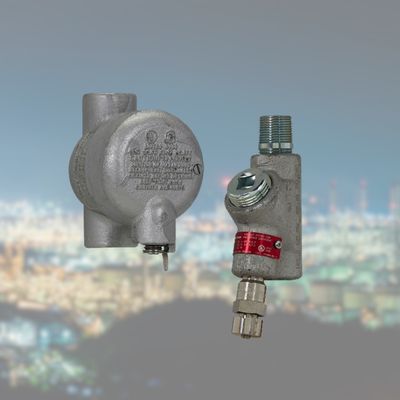
Technically, Condulet™ is a registered trademark of Crouse-Hinds (now a division of Eaton). It refers to a specific line of conduit outlet bodies.
However, much like we say “Kleenex” when we need a tissue or “Xerox” when we need a photocopy, electricians use the word “Condulet” as a generic term to refer to any cast metal box used to connect sections of electrical conduit.
Physically, it is a metal (or PVC) fitting with a removable cover that allows access to the interior of the pipe system.
A Brief History: Conduit + Outlet
The term was coined in 1906 by Crouse-Hinds. Before this invention, electrical wiring in industrial settings was often exposed and dangerous. When pipes (conduit) were introduced to protect wires, pulling the wire through the pipe was incredibly difficult, and making sharp turns was nearly impossible without damaging the insulation.
Crouse-Hinds combined the words “Conduit” and “Outlet” to create the Condulet. This invention revolutionized the electrical industry by creating a modular system that allowed for easy wire pulling and direction changes.
3 Reasons Why Condulets Are Used
Why don’t electricians just bend the pipe? Why do they need these fittings?
- Pulling Access: You cannot push a flexible wire through 100 feet of rigid pipe, especially if there are bends. A Condulet acts as a “pit stop.” Electricians fish the wire to the Condulet, pull a loop out, and then feed it into the next section.
- Sharp Turns: Standard conduit bends have a wide radius. If you need to turn a sharp 90-degree corner tight against a wall, a bent pipe won’t fit. A Condulet (specifically an “L” type) allows for a tight, flush turn.
- Splicing: Unlike a standard plumbing elbow, a Condulet has volume. This allows electricians to splice (connect) wires together inside the body, provided the box is stamped with the correct cubic volume allowance.
Decoding the Alphabet: LB, LL, LR, and C
If you look at a catalog for conduit bodies, you will see a confusing list of letters. These codes describe the shape of the body and the location of the cover.
Here is the cheat sheet for the most common types:
1. Type C (Continuous)
- Shape: Straight line.
- Usage: Used in the middle of a long, straight run of pipe to provide a pulling point.
2. Type LB (L-Back)
- Shape: 90-degree elbow.
- Opening: The cover is on the Back.
- Usage: The most common fitting. It is used when the conduit runs down a wall and needs to punch through the wall.
3. Type LL (L-Left) and LR (L-Right)
- Shape: 90-degree elbow.
- Opening: On the side.
- Usage: Used when the pipe runs along a wall and needs to turn a corner while staying flat against that wall.
- How to tell them apart: Hold the fitting like a pistol, aiming it away from you. If the opening is on the left, it is an LL; if on the right, it is an LR.
4. Type T (Tee)
- Shape: T-shaped.
- Usage: Allows the conduit run to split in two different directions.
Material Types: Not Just Iron Anymore
While the original Condulets were cast iron, modern conduit bodies come in various materials to suit the environment:
- Malleable Iron: The industrial standard. Heavy and durable.
- Aluminum: Lightweight and resistant to rust.
- PVC: Plastic bodies used specifically with PVC conduit (common in underground or residential applications).
- Stainless Steel: Used in food processing plants or highly corrosive areas.
Summary
Whether you call it a conduit body, an LB, or a Condulet, these fittings are the unsung heroes of electrical installation. They allow power to flow safely around tight corners and give electricians the access they need to maintain the system.