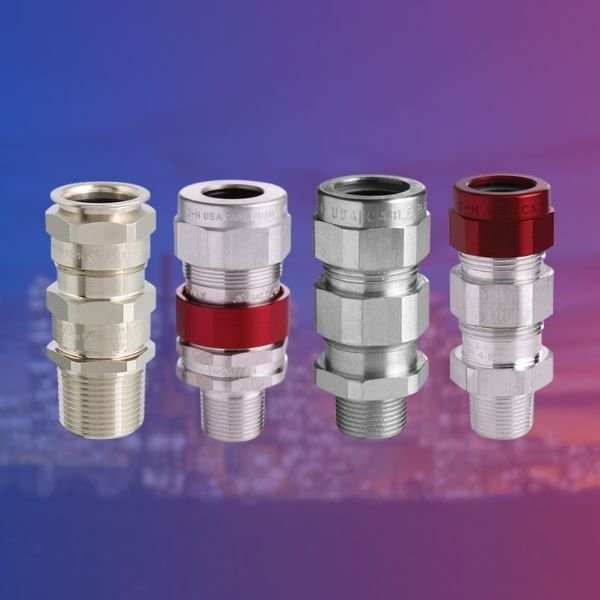

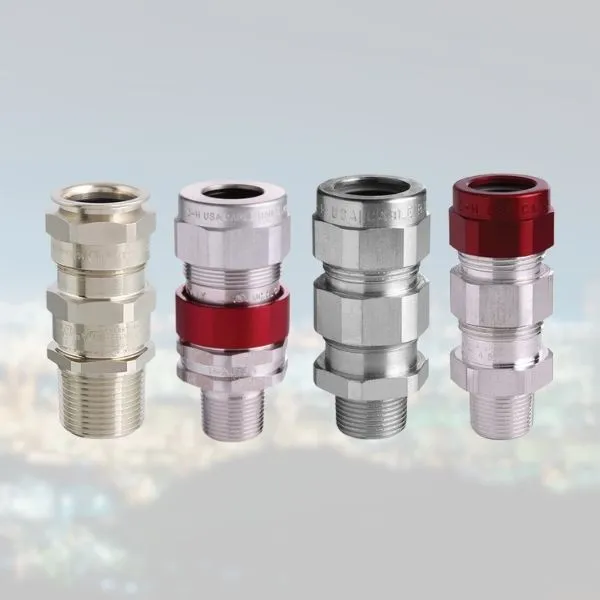
In the world of industrial electrical installation, few components cause as much confusion as the humble cable gland. It is the gatekeeper of the enclosure, the mechanical retention for the cable, and the last line of defense against environmental ingress.
However, for engineers working on international projects or OEMs shipping equipment globally, the divide between North American standards (NEC/CEC) and International standards (IEC/ATEX) can feel like navigating two different planets.
While Google is full of surface-level comparisons, this guide digs deep into the mechanical and philosophical differences between the two worlds, helping you avoid costly procurement errors and safety violations.
1. The Core Philosophy: Containment vs. Prevention
To understand the gland, you must understand the philosophy of the standard.
The NEC Approach (The Fortress)
The National Electrical Code (NEC), historically based on the Class/Division system, operates on a philosophy of containment.
- Assumption: Gas will enter the enclosure and an explosion will occur.
- Solution: The enclosure (and the gland/seal) must be strong enough to contain the explosion and cool the escaping hot gases so they don’t ignite the external atmosphere.
- The Gland’s Job: In Class I, Division 1 areas, the focus is on sealing the cable so tightly that flames cannot propagate through the cable interstices (the gaps between the wires).
The IEC Approach (The Risk Manager)
The International Electrotechnical Commission (IEC), utilizing the Zone system, operates on a philosophy of prevention and probability.
- Assumption: We can design systems (Ex e, Ex i) where an arc or spark is statistically unlikely or impossible.
- The Gland’s Job: While Ex d (Flameproof) glands are similar to NEC explosion-proof, the IEC relies heavily on Ex e (Increased Safety) glands for Zone 1 and 2. These focus on superior ingress protection (IP ratings) and impact resistance to prevent the gas from entering in the first place.
2. The Physical Battle: NPT vs. Metric
The most immediate physical difference between the two worlds is the threading.
- NEC (NPT Threads): North America uses National Pipe Taper (NPT). The threads are tapered (1 in 16). When you tighten an NPT gland, the threads themselves mash together to form a seal.
- Pro: Excellent mechanical strength and seal without O-rings.
- Con: Can strip if over-tightened; difficult to orient angles correctly.
- IEC (Metric Threads): The rest of the world uses ISO Metric parallel threads. The threads do not form the seal.
- Requirement: You must use a sealing washer or O-ring between the gland and the enclosure to maintain the IP rating.
- Pro: Easy to install; predictable torque.
Engineering Tip: Never force an NPT gland into a Metric entry. While they may seem to start threading (e.g., 1/2″ NPT into M20), the pitch is different. You will destroy the flame path and compromise the explosion protection.
3. The “Barrier” Debate: Sealing the Core
This is where the confusion peaks. When do you need a Barrier Gland (Compound filled) versus a standard compression gland?
The NEC “Seal-Off” Requirement
Under NEC Article 501, if you are in a Class I, Division 1 area, you generally must prevent the passage of gases, vapors, or flames through the cable core.
- MC-HL Cable: Traditional NEC installations use conduit or Metal Clad (MC-HL) cable. The gland (connector) must often be packed with a fast-setting liquid resin (Chico) that hardens around the individual conductors.
- Why? To stop “pressure piling” where an explosion moves through the cable like a fuse.
The IEC “Cold Flow” Nuance
IEC standards (specifically IEC 60079-14) have a different criteria for requiring barrier glands in Ex d applications:
- If the cable is not filled/extruded properly (allowing gas migration).
- If the cable is installed in a high-volume enclosure where an internal explosion could generate massive pressure.
However, IEC users frequently utilize elastomeric compression seals (rubber rings) rather than epoxy barriers, provided the cable is circular and compact. This is much faster to install than the messy epoxy required by the NEC.
4. Cable Armor: SWA vs. MC vs. TC
You cannot select a gland without defining the cable. The cable construction drives the gland design.
| Feature | NEC / North America | IEC / International |
|---|---|---|
| Common Cable | MC-HL (Metal Clad) or TC-ER (Tray Cable) | SWA (Steel Wire Armored) or STA (Tape Armored) |
| Armor Type | Corrugated Aluminum (continuous sheath) | Individual Steel Wires or Braided Metal |
| Grounding | The gland must ground the armor 360°. | The gland clamps the wire armor for earth continuity. |
| Gland Design | Designed to grip the corrugated armor. | Uses a “cone ring” or “diaphragm” to clamp wires. |
The Unique Challenge: An IEC gland designed for SWA (Steel Wire Armor) cannot be used on NEC MC-HL cable. The clamping mechanisms are incompatible.
5. The Rise of the “Global Gland”
Manufacturers have recognized the nightmare of stocking two distinct inventories. This has led to the development of Dual-Certified (Tri-Rated) cable glands.
These components carry markings for:
- NEC/CEC: Class I Div 1 & 2, Zones.
- ATEX/IECEx: Ex d IIC and Ex e II.
- Marine: ABS/DNV.
Why choose Global Glands?
- Inventory Reduction: One SKU covers multiple regions.
- Safety Factor: They usually meet the strictest requirements of both standards (e.g., the pull-out resistance of NEC and the impact resistance of IEC).
- Flexibility: They often come with reversible armor clamping rings that can handle both Single Wire Armor (IEC) and Braid/Tape (NEC style) armors.
Conclusion: Making the Right Specification
The gap between NEC and IEC is narrowing, thanks to the NEC’s adoption of the “Zone” system in Article 505 and 506. However, the legacy “Division” system remains dominant in North American oil and gas.
Key Takeaways for Procurement and Engineering:
- Check the Thread: Confirm if the enclosure is NPT or Metric before ordering glands. Adapters add height and potential leak points.
- Know the Cable: Is it Corrugated (MC-HL) or Wire Armored (SWA)? This dictates the internal geometry of the gland.
- Barrier Check: If you are in a Class I Div 1 or Zone 1 (Ex d) environment, assess if a compound barrier seal is legally required or if a compression seal suffices.
By understanding these two worlds, you ensure that your enclosure remains safe, compliant, and ready for power—regardless of which hemisphere it sits in.