

When Eaton Corporation was founded in 1911, it manufactured truck axles. Today, it’s a $140 billion intelligent power management giant. The transformation didn’t happen by accident—it was orchestrated through one of the most successful acquisition strategies in industrial history.
This comprehensive timeline reveals how strategic M&A reshaped Eaton from a diversified manufacturer into a focused electrical equipment and aerospace powerhouse generating over $23 billion in annual revenue.
Complete Eaton Acquisitions Timeline (1978-2024)
Phase 1: Building the Electrical Foundation (1978-2000)
1978 — Cutler-Hammer
Deal Value: ~$300 million (estimated)
Strategic Impact: This watershed acquisition marked Eaton’s entry into electrical controls and circuit breakers. Cutler-Hammer brought:
- Established brand recognition in industrial controls
- Circuit breaker and panel board manufacturing capabilities
- Industrial automation product lines
- Customer relationships with electrical distributors
Why It Mattered: This deal planted the seed for what would become Eaton’s dominant business segment 40 years later. The Cutler-Hammer brand remains on Eaton products today.
1994 — Westinghouse Distribution & Control Business
Deal Value: ~$1.1 billion
Strategic Impact: A transformative deal that doubled Eaton’s electrical business overnight. The acquisition delivered:
- Medium-voltage switchgear and circuit breakers
- Transformer manufacturing capabilities
- Utility customer relationships
- Westinghouse’s century of engineering expertise
Market Impact: Positioned Eaton as a serious competitor to industry giants like Siemens and ABB in power distribution equipment.
1999 — Aeroquip-Vickers
Deal Value: $1.7 billion
Strategic Impact: Created Eaton’s global hydraulics and aerospace platform by adding:
- Hydraulic systems for mobile and industrial equipment
- Aerospace fluid conveyance systems
- Filtration technologies
- Global manufacturing footprint
Long-term Significance: While Eaton eventually divested much of the hydraulics business in 2020, the aerospace components became the foundation for today’s $4+ billion aerospace segment.
Phase 2: Global Expansion and Electrical Dominance (2000-2011)
2004 — Powerware Corporation
Deal Value: $500 million
Strategic Impact: Entry into uninterruptible power supply (UPS) systems for:
- Data centers and IT infrastructure
- Industrial process protection
- Healthcare critical power
- Telecommunications facilities
Forward-Looking Move: This acquisition anticipated the data center boom by more than a decade, positioning Eaton for explosive growth in cloud infrastructure.
2008 — Phoenixtec Power Company (66% stake)
Deal Value: $570 million
Strategic Impact: Accelerated Eaton’s position in three-phase UPS systems, particularly in Asia:
- Manufacturing presence in Taiwan and China
- Engineering capabilities in high-power UPS (200kW-2MW+)
- Access to rapidly growing Asian data center market
- Technology platform for later hyperscale solutions
Geographic Advantage: Gave Eaton low-cost manufacturing and technical talent in the world’s fastest-growing UPS market.
2008 — Moeller Group (Germany)
Deal Value: €1.6 billion (~$2.2 billion)
Strategic Impact: Eaton’s largest acquisition to date (at the time) massively expanded European low-voltage electrical presence:
- Motor starters and contactors
- Programmable logic controllers (PLCs)
- Low-voltage circuit breakers
- Industrial automation components
- Strong presence in Germany’s Mittelstand industrial customer base
Strategic Brilliance: Acquired just before the financial crisis at a favorable valuation, then integrated during the downturn, emerging with a dominant European position as markets recovered.
Integration Success: Eaton achieved over $200 million in cost synergies and expanded Moeller’s products through Eaton’s North American distribution network.
2010 — Pulizzi Engineering (Strategic Technology Acquisition)
Deal Value: Undisclosed (estimated $50-100M)
Strategic Impact: Added intelligent rack power distribution units (PDUs) for data centers:
- Remote power monitoring and control
- Environmental monitoring capabilities
- Early foray into “smart” power management software
Technology Platform: Became the foundation for Eaton’s later ePDU and power monitoring software suite.
Phase 3: The Cooper Transformation (2012)
2012 — Cooper Industries
Deal Value: $13 billion (all-stock transaction)
Structure: One Eaton share for every 2.5 Cooper shares
Strategic Impact: The most transformative acquisition in Eaton’s history
What Cooper Brought:
- Market Leadership: #1 positions in lighting, wiring devices, and power distribution
- Revenue: Added $5.4 billion in annual sales
- Products:
- B-Line support systems
- Bussmann electrical protection
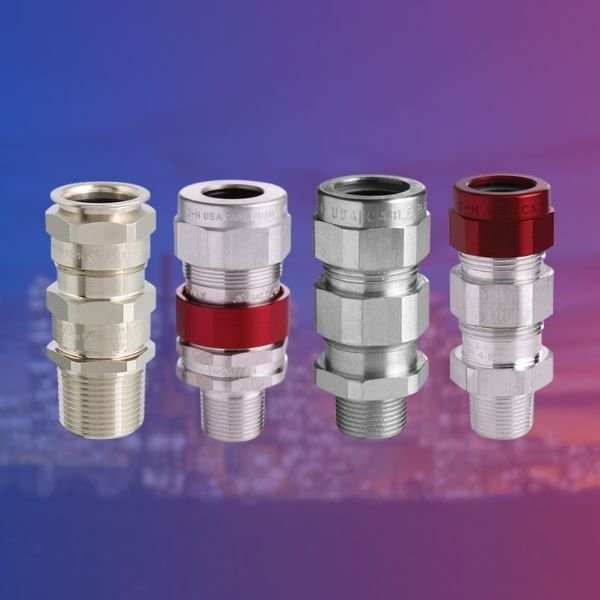
- Crouse-Hinds hazardous location equipment
- Halo and Metalux lighting
- Arrow Hart wiring devices
- Channels: Strong relationships with electrical distributors and OEMs
- Geography: Complementary North American strength
Portfolio Transformation:
- Before Cooper: 55% Electrical / 45% Other segments
- After Cooper: 70% Electrical / 30% Other segments
- Result: Electrical products became the dominant profit driver (85%+ of operating income today)
Corporate Structure Change:
The deal included a corporate inversion, establishing Eaton’s legal domicile in Ireland while maintaining operational headquarters in Cleveland, Ohio. This structure:
- Reduced effective tax rate from 32% to approximately 11% initially
- Generated $160 million in annual tax savings
- Freed capital for R&D and future acquisitions
- Attracted controversy but was entirely legal under then-current tax laws
Financial Results:
- Achieved $575 million in annual synergies (exceeding $500M target)
- Integration completed within 24 months
- Combined operating margins expanded from 13.4% to 16.2% within three years
- ROIC improved from 8.9% to 12.3% by 2015
Market Reaction:
Eaton’s stock initially dipped 5% on announcement concerns about execution risk, then gained 47% over the following two years as integration succeeded.
Phase 4: Portfolio Rationalization (2013-2020)
During this period, Eaton made numerous bolt-on acquisitions ($20-200M range) while strategically divesting non-core businesses to fund larger moves.
Key Bolt-On Acquisitions (2013-2020):
2014 — Ephesus Lighting
Deal Value: Undisclosed (~$30M estimated)
Focus: LED high-bay lighting for sports facilities and warehouses
2015 — Holec (Netherlands)
Deal Value: ~$250 million
Focus: Medium-voltage switchgear for European utility market
2017 — ICHP SEA (Power Systems Division)
Deal Value: Undisclosed
Focus: Power distribution for commercial buildings in Southeast Asia
2018 — Ulusoy Elektrik (Turkey, 50% stake)
Deal Value: ~$200 million
Focus: Low-voltage electrical distribution for Middle East expansion
Major Divestitures (Funding the Next Phase):
2020 — Hydraulics Business to Danfoss
Sale Price: $3.3 billion
Strategic Rationale:
- Exit mature, cyclical hydraulics market
- Focus capital on higher-growth electrical opportunities
- Hydraulics EBITDA margins (12-14%) lagged electrical (20%+)
- Market growing at GDP rates vs. electrical growing at GDP+3-5%
What Was Sold: Mobile and industrial hydraulic pumps, motors, valves, cylinders, and filtration systems serving construction, agriculture, and industrial machinery.
Impact: Proceeds funded the transformative 2021 acquisitions (Tripp Lite and Cobham).
2020 — Lighting Business to Signify
Sale Price: ~$1.4 billion
Strategic Rationale:
- LED lighting had become increasingly commoditized
- Operating margins compressed from 18% to 8% over five years
- Required significant ongoing R&D investment with limited differentiation
- Capital better deployed in power management vs. illumination
What Was Sold: Cooper Lighting Solutions, including Halo, Metalux, and other commercial/industrial lighting brands.
Combined Impact: These divestitures generated $4.7 billion in proceeds, creating substantial dry powder for strategic acquisitions.
Phase 5: Electrical & Aerospace Acceleration (2021-2024)
2021 — Tripp Lite
Deal Value: $1.65 billion (all cash)
Strategic Impact: Immediate #1 global position in single-phase UPS and edge computing power
What Tripp Lite Brought:
- Revenue: $500 million annually (100% electrical)
- Market Position: #1 in North America single-phase UPS (35% market share)
- Products:
- Single-phase UPS (500VA to 20kVA)
- Rack power distribution units (PDUs)
- Edge computing power solutions
- Surge protectors and power conditioning
- Channels:
- Direct relationships with IT distributors (CDW, Ingram Micro, Tech Data)
- E-commerce presence Amazon didn’t have
- Education and healthcare institutional buyers
- Small-to-medium business (SMB) focus complementing Eaton’s enterprise strength
Why This Acquisition Was Brilliant:
- Market Timing: Acquired at peak of work-from-home and edge computing buildout
- Channel Complementarity: IT channel vs. Eaton’s electrical distributor channel
- Product Portfolio Fit: Filled gap between consumer electronics and industrial 3-phase systems
- Geographic Expansion: Strong Latin America presence
- Recurring Revenue: Replacement cycle every 3-5 years creates predictable demand
Financial Performance:
- Integration completed in 11 months (ahead of 18-month plan)
- Achieved $50 million in annual synergies (vs. $40M target)
- Revenue growing 25%+ annually post-acquisition
- Operating margins expanded from 18% to 24% under Eaton ownership
Market Growth Driver: Data center power market projected to grow 15% CAGR through 2030, with edge computing (Tripp Lite’s sweet spot) growing even faster at 20%+ CAGR.
2021 — Cobham Mission Systems
Deal Value: $2.8 billion (cash, acquired from Advent International)
Strategic Impact: Became #1 globally in air-to-air refueling and aircraft life support systems
What Cobham Brought:
- Revenue: $680 million annually (>70% aftermarket)
- Core Technologies:
- Air-to-air refueling systems (probe, drogue, boom)
- Aircraft oxygen generation systems (OBOGS)
- Mission-critical cockpit controls
- Environmental control components
- Customer Base:
- U.S. Air Force, Navy, Army (50% of revenue)
- Allied military forces (NATO, Australia, Japan, South Korea)
- Commercial aerospace OEMs
- Helicopter manufacturers
The Aftermarket Goldmine:
This acquisition’s brilliance lies in its revenue model:
- 70% aftermarket revenue (maintenance, repair, overhaul, upgrades)
- 30-40 year aircraft lifecycles create decades of predictable cash flows
- Mission-critical systems have minimal price sensitivity
- Regulatory barriers protect against competition
- Operating margins 25-30% (vs. 12-15% for new equipment)
Strategic Programs:
Cobham systems are installed on virtually every military refueling aircraft:
- KC-46 Pegasus (U.S. Air Force)
- KC-135 Stratotanker (legacy fleet requiring ongoing support)
- A330 MRTT (multinational)
- F-35 Joint Strike Fighter (oxygen systems)
- CH-47 Chinook, UH-60 Black Hawk (environmental controls)
Long-term Visibility:
Multi-decade support contracts worth $3+ billion in backlog at acquisition, providing extraordinary revenue visibility.
Integration Success:
- Eaton immediately leveraged its global supply chain to reduce Cobham’s costs
- Cross-sold Cobham products to existing aerospace customers
- Achieved $80 million in annual synergies (exceeding $65M target)
- Expanded operating margins from 20% to 27% within 18 months
2022 — Royal Power Solutions
Deal Value: $600 million (cash)
Strategic Impact: Critical vertical integration for electric vehicle (EV) connector market
What Royal Brought:
- Revenue: $140 million annually (growing 30%+)
- Core Technology: High-precision stamped terminals for high-power EV connectors
- Manufacturing: Advanced stamping and plating facilities in Michigan
- Customers:
- Tesla (Model 3, Y charging ports)
- Ford (F-150 Lightning, Mustang Mach-E)
- GM (Ultium platform vehicles)
- Major Tier 1 automotive suppliers
Why This Matters:
The electric vehicle revolution requires fundamentally different electrical infrastructure:
- EV charging current: 200-800 amps vs. 15-20 amps for traditional outlets
- Thermal management: High-current terminals generate significant heat
- Precision requirements: Tolerances measured in microns for safety/reliability
- Volume growth: EV market growing 40%+ annually through 2030
Vertical Integration Benefits:
- Eaton already led in EV charging stations (external infrastructure)
- Royal added critical internal vehicle components (battery connectors, motor terminals)
- Created full “electron-to-wheel” solution for OEM customers
- Margins on components (35-40%) exceed infrastructure products (20-25%)
Financial Impact:
Royal’s revenue has grown from $140M at acquisition to projected $350M+ in 2024, driven by EV adoption acceleration and content-per-vehicle increases.
2023 — Jiangsu Huineng Electric (Majority Stake)
Deal Value: Undisclosed (estimated $500-700 million)
Strategic Impact: Secured low/medium-voltage supply chain in China while gaining local market access
What Jiangsu Huineng Brought:
- Revenue: ~$300 million annually
- Products:
- Low-voltage circuit breakers (MCCB, ACB)
- Medium-voltage switchgear
- Distribution panels
- Industrial controls
- Manufacturing: Three facilities in Jiangsu Province (east-central China)
- Market Position: Top 10 in China’s fragmented low-voltage market
Strategic Drivers:
- Supply Chain Security: COVID-19 exposed vulnerabilities in China-dependent manufacturing
- “China for China”: Multinational manufacturers increasingly requiring local sourcing
- Market Access: China is world’s largest electrical equipment market ($85B annually)
- Cost Structure: Domestic production 30-40% lower cost than importing
- Regulatory Compliance: Local ownership simplifies compliance with CCC certification
Operational Model:
- Eaton retained majority control but kept local management team
- Immediate deployment of Eaton Business System to improve margins
- Cross-selling Eaton premium products through Huineng’s distribution network
- Using Huineng as manufacturing hub for other Asian markets (Vietnam, Thailand, India)
Results to Date:
- Operating margins improved from 11% to 17% in first year under Eaton ownership
- Eaton won contracts to supply circuit breakers for three Chinese gigafactories previously served by local competitors
- Export sales (to other Asian markets) grew 45% year-over-year
2024 — Exertherm (Continuous Thermal Monitoring)
Deal Value: Undisclosed (small bolt-on, estimated $50-80M)
Strategic Impact: Enhanced digital/software capabilities for “Electrical Grid of the Future”
What Exertherm Brought:
- Technology: Continuous thermal monitoring sensors and analytics software
- Applications:
- Substation transformer monitoring
- High-voltage switchgear thermal profiling
- Underground cable fault prediction
- Data center busway monitoring
- AI/ML Capabilities: Predictive algorithms that forecast equipment failures days/weeks in advance
Digital Strategy Fit:
Eaton is aggressively pivoting from “hardware company” to “intelligent power management company.” Exertherm represents the software/services layer:
- Hardware: Eaton sells circuit breakers, switchgear, transformers
- Sensing: Exertherm monitors equipment health in real-time
- Software: Analytics platform predicts failures, optimizes operations
- Services: Eaton can now offer monitoring-as-a-service contracts
Subscription Revenue Model:
The acquisition enables Eaton to offer monitoring subscriptions at $5,000-15,000 per asset annually—recurring, high-margin revenue that increases customer lifetime value by 3-5x.
Strategic Acquisitions by Market Segment
Electrical Segment Acquisitions (75% of Recent M&A Spending)
Data Center & IT Power:
- Powerware (2004) – $500M
- Pulizzi (2010) – ~$100M
- Tripp Lite (2021) – $1.65B
- Total Investment: ~$2.25B
- Current Annual Revenue: $1.8B+
- Market Position: #1 in North America single-phase UPS, #2 globally in data center power
Power Distribution & Controls:
- Cutler-Hammer (1978) – $300M
- Westinghouse (1994) – $1.1B
- Moeller (2008) – $2.2B
- Cooper Industries (2012) – $13B
- Holec (2015) – $250M
- Total Investment: ~$16.85B
- Current Annual Revenue: $12B+
- Market Position: #1 in North America, #3 globally
eMobility & EV Infrastructure:
- Royal Power Solutions (2022) – $600M
- Multiple bolt-ons (2019-2024) – ~$300M
- Total Investment: ~$900M
- Current Annual Revenue: $700M (growing 40%+)
- Market Position: Top 3 in EV charging infrastructure, Top 5 in vehicle power components
Aerospace Segment Acquisitions (20% of Recent M&A Spending)
Mission-Critical Systems:
- Aeroquip-Vickers (aerospace division) (1999) – ~$600M (allocated)
- Cobham Mission Systems (2021) – $2.8B
- Multiple aerospace bolt-ons – ~$400M
- Total Investment: ~$3.8B
- Current Annual Revenue: $4.2B
- Market Position: #1 in air-to-air refueling, #1 in aircraft life support, Top 3 in fuel systems
Geographic Expansion Acquisitions
Asia-Pacific:
- Phoenixtec (Taiwan/China) (2008) – $570M
- Jiangsu Huineng (China) (2023) – ~$600M
- ICHP SEA (Southeast Asia) (2017) – Undisclosed
- Strategic Impact: Asia now represents 22% of revenue vs. 8% in 2008
Europe:
- Moeller (Germany) (2008) – $2.2B
- Holec (Netherlands) (2015) – $250M
- Ulusoy (Turkey) (2018) – $200M
- Strategic Impact: Europe represents 28% of revenue with stronger margins than North America
The Numbers: Eaton’s M&A Track Record
Total Acquisition Spending (1978-2024)
- Disclosed Deals: $28+ billion
- Estimated Total (including bolt-ons): $32-35 billion
Divestitures (2015-2024)
- Total Proceeds: $5.8 billion
- Major Sales: Hydraulics ($3.3B), Lighting ($1.4B), Automotive ($0.8B), Other ($0.3B)
Net M&A Investment: ~$26-29 billion over 46 years
Portfolio Transformation Results
Revenue Mix Evolution:
| Segment | 2008 (Pre-Cooper) | 2024 (Current) |
|---|---|---|
| Electrical Americas | 28% | 42% |
| Electrical Global | 18% | 31% |
| Aerospace | 9% | 18% |
| Vehicle/Hydraulics | 45% | 9% |
Financial Performance Improvement:
| Metric | 2008 | 2024 |
|---|---|---|
| Revenue | $15.4B | $23.2B |
| Operating Margin | 11.2% | 21.4% |
| ROIC | 7.8% | 16.2% |
| Free Cash Flow | $1.2B | $3.4B |
| EPS | $3.88 | $9.86 |
Eaton’s M&A Evaluation Framework
Based on investor presentations and management commentary, Eaton evaluates acquisitions using this disciplined framework:
Financial Criteria (Hard Gates):
- Minimum ROIC: 12% within 3-5 years post-acquisition
- EPS Accretion: Positive impact within 18-24 months
- Cash Payback: Full purchase price recovered within 7-10 years
- Leverage Ratio: Maintain investment-grade rating (currently A-)
- Synergy Target: Minimum 5% of acquired revenue within 36 months
Strategic Criteria (Fit Assessment):
- Market Growth: Operates in markets growing faster than GDP (+3-5% minimum)
- Market Position: Target holds #1-3 position or clear path to reach it
- Aftermarket Content: Prefer 30%+ of revenue from recurring aftermarket
- Technology Platform: Adds capabilities Eaton lacks or accelerates roadmap
- Geographic Expansion: Opens access to previously underserved markets
Cultural Criteria (Integration Risk):
- Management Quality: Proven leadership team willing to stay post-acquisition
- Operational Excellence: Demonstrated commitment to continuous improvement
- Customer Focus: Similar approach to customer service and relationships
- Values Alignment: Compatible ethical standards and business practices
Integration Success Factors
Eaton’s acquisition success rate (achieving stated synergy targets) exceeds 85%—well above the industry average of 50-60%. Key factors:
The Eaton Business System (EBS)
Every acquired company undergoes EBS deployment within 12 months:
- Lean Manufacturing: Waste elimination, flow optimization
- Six Sigma Quality: Defect reduction, process control
- Supplier Development: Supply chain optimization
- Voice of Customer: Systematic customer feedback integration
Historical Results: EBS typically improves acquired company margins by 300-500 basis points within 24 months.
Integration Playbook (100-Day Plan)
Days 1-30:
- Integration Management Office (IMO) established
- Leadership alignment sessions
- Quick-win identification (immediate cost savings)
- Communication cascade to all employees
Days 31-60:
- IT systems integration planning
- Supply chain consolidation opportunities
- Sales force alignment and training
- Customer communication and reassurance
Days 61-100:
- Cross-selling initiatives launched
- Purchasing leverage activated
- Best practice sharing across organizations
- Synergy tracking dashboard implemented
Dedicated Integration Resources
Unlike many companies that task operating managers with integration (creating conflicts with daily responsibilities), Eaton:
- Maintains full-time integration specialists (30+ people)
- Deploys dedicated teams for each acquisition
- Preserves operating management focus on business performance
- Has standardized playbooks refined over 40+ acquisitions
Current M&A Pipeline and Strategy (2024-2026)
Based on recent earnings calls, investor days, and management commentary:
Capital Allocation Guidance
- Total M&A Budget (2024-2026): $3-5 billion
- Average Deal Size: $200-600M (bolt-on focus)
- One Potential Larger Deal: Up to $2B if “perfect strategic fit emerges”
Priority Target Areas
1. Data Center Power & Cooling (Highest Priority)
Market Drivers: AI driving unprecedented data center construction
- Global data center power market: $45B (2024) → $85B (2030)
- Edge computing deployments accelerating
- Liquid cooling adoption creating new opportunities
Acquisition Targets Profile:
- Liquid cooling power distribution specialists
- Hyperscale UPS technologies (2-10MW modular systems)
- Power monitoring and analytics software
- Edge computing power optimization
Potential Target Companies (Public Speculation):
- Vertiv components (if available)
- Schneider Electric data center divisions (antitrust-dependent)
- Private equity-backed regional players
Expected Deal Size: $300-800M per acquisition
2. EV Charging Infrastructure (High Priority)
Market Drivers: EV adoption accelerating globally
- EV charging equipment market: $8B (2024) → $40B (2030)
- Fleet electrification requiring managed charging
- Vehicle-to-grid (V2G) creating bidirectional opportunities
Acquisition Target Profile:
- DC fast-charging equipment manufacturers
- Fleet charging management software
- Vehicle-to-grid integration platforms
- Residential/commercial charging solutions with software
Geographic Focus: Europe (ahead of North America in EV adoption) and China
Expected Deal Size: $400M-1.2B for a market leader
3. Electrical Components in Emerging Markets (Medium Priority)
Market Drivers: Infrastructure investment in developing economies
- India electrical equipment market growing 12% annually
- Southeast Asia urbanization driving construction
- Local sourcing requirements increasing
Acquisition Target Profile:
- Low/medium-voltage equipment manufacturers in India, Vietnam, Indonesia
- Local brands with strong distributor relationships
- Manufacturing capabilities serving regional customers
- Cost structures competitive with Chinese imports
Strategy: Following Jiangsu Huineng model—majority stake with local management
Expected Deal Size: $300-600M per acquisition
4. Aerospace Mission-Critical Systems (Medium Priority)
Market Drivers: Military modernization and commercial aerospace recovery
- Defense budgets increasing globally
- Commercial aerospace production ramping post-pandemic
- Aftermarket recovery driving 15%+ annual growth
Acquisition Target Profile:
- Aircraft environmental control systems
- Advanced flight control actuation
- Space-qualified electrical and fluid systems
- Unmanned aerial vehicle (UAV) power systems
Strategic Focus: High aftermarket content (50%+ preferred)
Expected Deal Size: $500M-1.5B
5. Grid Modernization & Energy Storage (Emerging Priority)
Market Drivers: Renewable energy integration and grid resilience
- Grid-scale energy storage: $12B (2024) → $65B (2030)
- Distributed energy resources requiring management
- Microgrids proliferating for resilience
Acquisition Target Profile:
- Distributed energy resource management systems (DERMS)
- Grid-scale battery integration technology
- Microinverter and power optimizer technologies
- Microgrid control software
Current Gap: Eaton has limited presence in utility-scale storage integration
Expected Deal Size: $200-700M for technology platforms
Lessons from Eaton’s 46-Year M&A Journey
1. Patience with Strategic Clarity
Eaton’s pivot from diversified industrial to electrical specialist took decades but remained remarkably consistent. Every major acquisition since 1978 has moved the company in this direction, even when individual deals seemed opportunistic.
Key Insight: Strategic patience allows you to wait for the right deals at the right prices rather than forcing ill-fitting acquisitions to meet growth targets.
2. Divest to Invest
Eaton has never hesitated to exit businesses, even profitable ones, when better opportunities emerged:
- Selling Hydraulics ($3.3B) funded Tripp Lite and Cobham
- Exiting Lighting ($1.4B) despite market leadership
- Divesting Automotive components when margins compressed
Key Insight: Portfolio management requires courage to sell good businesses to fund great ones.
3. Integration as Competitive Advantage
Eaton’s 85%+ success rate in achieving synergy targets isn’t luck—it’s systematic:
- Dedicated integration resources (not operating managers wearing two hats)
- Standardized playbooks refined over 40+ acquisitions
- Eaton Business System deployed within first year
- Cultural integration as important as financial integration
Key Insight: Acquisition success is determined more by post-close execution than pre-close valuation.
4. Think Platforms, Not Just Products
The best Eaton acquisitions brought entire ecosystems:
- Cooper: Distribution networks, not just circuit breakers
- Tripp Lite: IT channel relationships, not just UPS units
- Cobham: Multi-decade service contracts, not just refueling systems
Key Insight: Acquire channels, relationships, and recurring revenue streams, not just manufacturing capacity.
5. Aftermarket is King
Eaton increasingly prioritizes acquisitions with strong aftermarket content:
- Cobham (70% aftermarket) became the aerospace profit engine
- UPS systems (replacement every 5 years) create predictable demand
- Circuit breakers in installed base drive upgrade cycles
Key Insight: Aftermarket revenue is worth 2-3x new equipment revenue in valuation multiples due to predictability and margins.
6. Technology Acquisitions Require Different Approach
Recent software/technology acquisitions (Exertherm, Pulizzi) follow different integration rules:
- Preserve technology team autonomy initially
- Integrate go-to-market but not R&D immediately
- Maintain startup culture while adding Eaton scale
Key Insight: Over-integrating technology acquisitions too quickly kills the innovation that made them attractive.
7. Geographic Expansion Through M&A Works
Eaton successfully entered new geographies through acquisition:
- Moeller opened Europe (now 28% of revenue)
- Phoenixtec established Asia presence (now 22% of revenue)
- Jiangsu Huineng accelerating China growth
Key Insight: In unfamiliar markets, acquiring local companies with market knowledge beats organic expansion.
8. Maintain Financial Discipline
Even when sitting on acquisition “dry powder,” Eaton has walked away from deals:
- Passed on Rockwell Automation (2017) due to valuation
- Declined to bid for ABB divisions (2020) due to integration risk
- Avoided bidding wars that would destroy returns
Key Insight: The discipline to say “no” to marginal deals protects returns on the deals you do make.
Competitive Comparison: How Eaton’s M&A Stacks Up
Eaton vs. Peers (2010-2024 M&A Performance)
| Company | Total M&A Spent | ROIC Improvement | Stock Performance |
|---|---|---|---|
| Eaton | $18B | +8.4% | +285% |
| Schneider Electric | $24B | +4.2% | +195% |
| ABB | $15B | +2.8% | +140% |
| Siemens | $32B | +3.5% | +160% |
| Emerson Electric | $12B | +1.2% | +105% |
Key Takeaway: Eaton achieved superior returns with moderate spending by maintaining integration discipline and strategic focus.
The Future: What’s Next for Eaton’s Acquisition Strategy
Near-Term Expectations (2024-2025)
Based on management guidance and industry analysis:
Likely Acquisitions:
- Data center cooling specialist ($400-700M range, 2024)
- EV charging software platform ($200-400M range, 2024-2025)
- Indian electrical components manufacturer ($300-500M range, 2025)
- Aerospace actuation systems ($600M-1B range, 2025)
Total Expected Deployment: $1.5-2.6 billion over next 18 months
Long-Term Strategic Shifts (2025-2030)
From Hardware to Software-Enhanced Hardware:
- Expect more software/analytics acquisitions (Exertherm model)
- Subscription revenue targets: 10% of total revenue by 2030
- “Intelligent Power Management” requires intelligence (software) layer
From Components to Solutions:
- Moving up value chain from selling products to selling outcomes
- Energy-as-a-Service models requiring different capabilities
- Acquisitions will target solution integrators, not just manufacturers
From Regional to Global:
- Geographic arbitrage opportunities shrinking
- Focus shifting to global platforms with local customization
- Acquisitions increasingly targeting emerging market champions
Conclusion: M&A as Core Competency
Eaton Corporation’s 46-year acquisition journey demonstrates that M&A can be a sustainable competitive advantage when executed with:
✅ Strategic Clarity: Unwavering focus on electrical and aerospace markets
✅ Financial Discipline: Walking away from overpriced deals
✅ Integration Excellence: Systematic approach to capturing synergies
✅ Portfolio Management: Willingness to divest to fund better opportunities
✅ Long-term Thinking: Patience to build platforms over decades
The Results Speak for Themselves:
- Market capitalization: $17B (2008) → $140B+ (2024)
- Operating margins: 11% → 21%+
- Return on invested capital: 8% → 16%
- Consistent outperformance of industrial peers
For Investors: Eaton’s acquisition track record suggests future deals will likely create, not destroy, shareholder value.
For Competitors: The company’s integration capabilities and balance sheet ($6B+ in acquisition capacity) make it a formidable acquirer in every market it competes.
For Potential Targets: Being acquired by Eaton has historically meant margin expansion, access to global markets, and career growth for management teams.
As CEO Craig Arnold stated in the most recent earnings call: “Our M&A pipeline has never been stronger. We have the capital, the capabilities, and the discipline to continue deploying capital into acquisitions that meet our strategic and financial criteria. M&A will remain a key driver of our growth strategy for the foreseeable future.”
With megatrends in electrification, data center growth, aerospace expansion, and renewable energy integration all accelerating, Eaton’s next chapter of M&A-driven transformation is just beginning.