
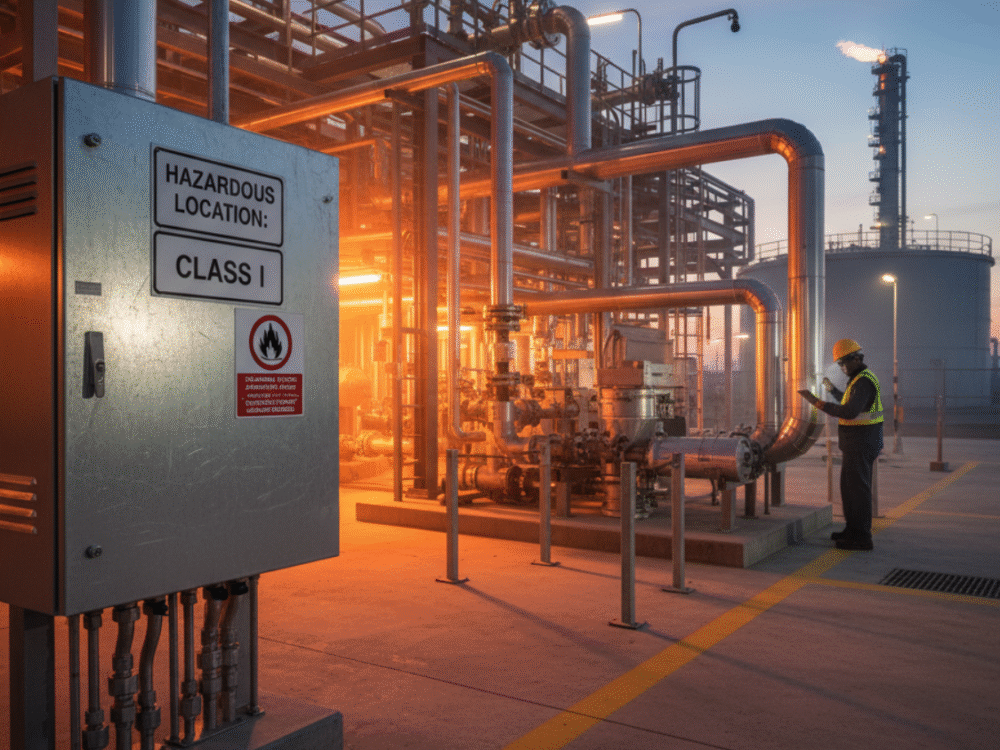
In industrial and commercial settings where flammable gases, combustible dusts, or ignitable fibers pose safety risks, hazardous location classifications are the cornerstone of safety engineering. These classifications—Class I, II, and III—are standardized systems that dictate how electrical equipment must be designed, installed, and maintained to prevent catastrophic accidents like explosions or fires. Understanding these classes isn’t just a regulatory obligation; it’s a critical step in safeguarding lives, property, and productivity.
Why Hazardous Location Classifications Matter
Electrical equipment can act as an ignition source if sparks, heat, or arcs occur. In environments with flammable substances, a single spark can trigger an explosion. Hazardous location classifications:
- Prevent ignition risks by ensuring equipment is built to contain or isolate hazards.
- Guide safe installation practices (e.g., sealing conduits, using explosion-proof enclosures).
- Help industries comply with standards like the NEC (National Electrical Code®) in the U.S. or the IEC (International Electrotechnical Commission) globally.
Non-compliance can lead to devastating consequences: injuries, fatalities, equipment destruction, and legal liabilities.
Class I: Flammable Gases, Vapors, and Liquids
Class I locations are defined by the presence of flammable gases or vapors in quantities sufficient to produce explosive or ignitable mixtures. Common examples include:
- Oil refineries (e.g., propane, methane).
- Chemical plants (e.g., acetylene, benzene).
- Paint spray booths (e.g., solvents, alcohols).
- Fuel storage facilities (e.g., gasoline, diesel).
Class I is further divided into Divisions and Zones based on the frequency and duration of hazard exposure:
| Division | Zone | Definition | Example Environments |
|---|---|---|---|
| Division 1 | Zone 0 | Hazard is present continuously or frequently (e.g., during normal operations). | Inside fuel tanks, reactor vessels. |
| Division 1 | Zone 1 | Hazard is likely under normal conditions (e.g., during repair or maintenance). | Areas near valves, pumps, or vents in refineries. |
| Division 2 | Zone 2 | Hazard is not normally present but may occur briefly (e.g., due to leaks). | Storage rooms, warehouses with flammable liquids. |
Equipment Requirements for Class I:
- Explosion-proof enclosures that contain internal explosions without igniting external atmospheres.
- Sealed conduits to prevent gas migration.
- Intrinsically safe circuits that limit electrical energy to non-ignitable levels.
Class II: Combustible Dusts
Class II locations involve combustible dusts that, when suspended in air, can ignite and cause explosions. These dusts include:
- Agricultural products (e.g., grain, flour).
- Metals (e.g., aluminum, magnesium).
- Chemicals (e.g., sulfur, coal).
- Plastics and rubber.
Class II uses a Division-based system:
| Division | Definition | Example Environments |
|---|---|---|
| Division 1 | Dust is present in the air under normal conditions (e.g., during processing). | Grain elevators, flour mills, woodworking shops. |
| Division 2 | Dust is not normally suspended but accumulates and may become airborne. | Storage bins, conveyor belts, packaging areas. |
Equipment Requirements for Class II:
- Dust-tight enclosures that prevent dust ingress.
- Specialized motors and switches designed to avoid surface temperatures that could ignite dust.
- Pressurized systems to keep dust away from electrical components.
Notable Hazard: Dust explosions often cause secondary blasts when settled dust is disturbed, making Class II particularly dangerous.
Class III: Ignitable Fibers and Flyings
Class III locations involve ignitable fibers or flyings—materials that aren’t dust but can burn and propagate flames. These include:
- Textile fibers (e.g., cotton, wool).
- Wood shavings, sawdust, or paper scraps.
- Synthetic materials (e.g., nylon, polyester).
Like Class II, Class III uses Divisions:
| Division | Definition | Example Environments |
|---|---|---|
| Division 1 | Fibers/flyings are handled or processed (e.g., during manufacturing). | Textile mills, woodworking factories. |
| Division 2 | Fibers/flyings are stored or handled in sealed containers (e.g., warehousing). | Storage facilities for raw materials. |
Equipment Requirements for Class III:
- Enclosures that prevent fiber ingress (e.g., gasketed boxes).
- Cooling systems to avoid heat buildup.
- Specialized wiring methods to reduce spark risks.
Key Insight: Class III hazards are less about explosive force and more about rapid fire spread, so equipment focuses on containing flames and heat.
Class I, II, III: A Comparative Overview
| Class | Hazard Type | Primary Risks | Key Industries |
|---|---|---|---|
| I | Flammable gases/vapors | Explosions due to ignition of gases. | Oil/gas, chemicals, pharmaceuticals. |
| II | Combustible dusts | Dust explosions with secondary blasts. | Agriculture, mining, food processing. |
| III | Ignitable fibers/flyings | Fast-spreading fires. | Textiles, woodworking, manufacturing. |
Standards and Compliance: The Regulatory Framework
- NEC (NFPA 70): The primary standard in the U.S., defining Class, Division, and Zone systems.
- IEC 60079: Global standard using Zone classifications (e.g., Zone 0, 1, 2 for gases; Zone 20, 21, 22 for dusts).
- OSHA Regulations: Enforce compliance in workplaces to prevent explosions.
Note: The Zone system (IEC) is gaining international traction, while the Division system (NEC) remains common in North America. Always verify local requirements!
Best Practices for Safety
- Conduct a Hazard Analysis: Identify flammable materials, their concentrations, and exposure frequencies.
- Select Certified Equipment: Use devices rated for the specific Class, Division/Zone (e.g., UL, FM, or ATEX certifications).
- Follow Installation Guidelines: Seal conduits, use bonding/grounding, and maintain ventilation.
- Train Personnel: Ensure workers understand hazards and emergency procedures.
- Schedule Regular Inspections: Check for dust accumulation, gas leaks, or equipment wear.
💡 Pro Tip: In Class II environments, even “non-sparking” tools can ignite dust if they overheat. Always use equipment rated for the specific hazard class!
Conclusion: Safety Through Classification
Hazardous location classifications (Class I, II, III) are the bedrock of explosion prevention in high-risk industries. By rigorously applying these standards—whether through the Division or Zone system—businesses can mitigate risks, protect workers, and ensure operational continuity. Remember, cutting corners in hazardous locations isn’t an option; it’s a matter of survival.